Effective co-production strengthens relationships between practitioners, academics, and people with lived experience. A new Research in Practice resource provides guidance and support to develop practice for co-production week.
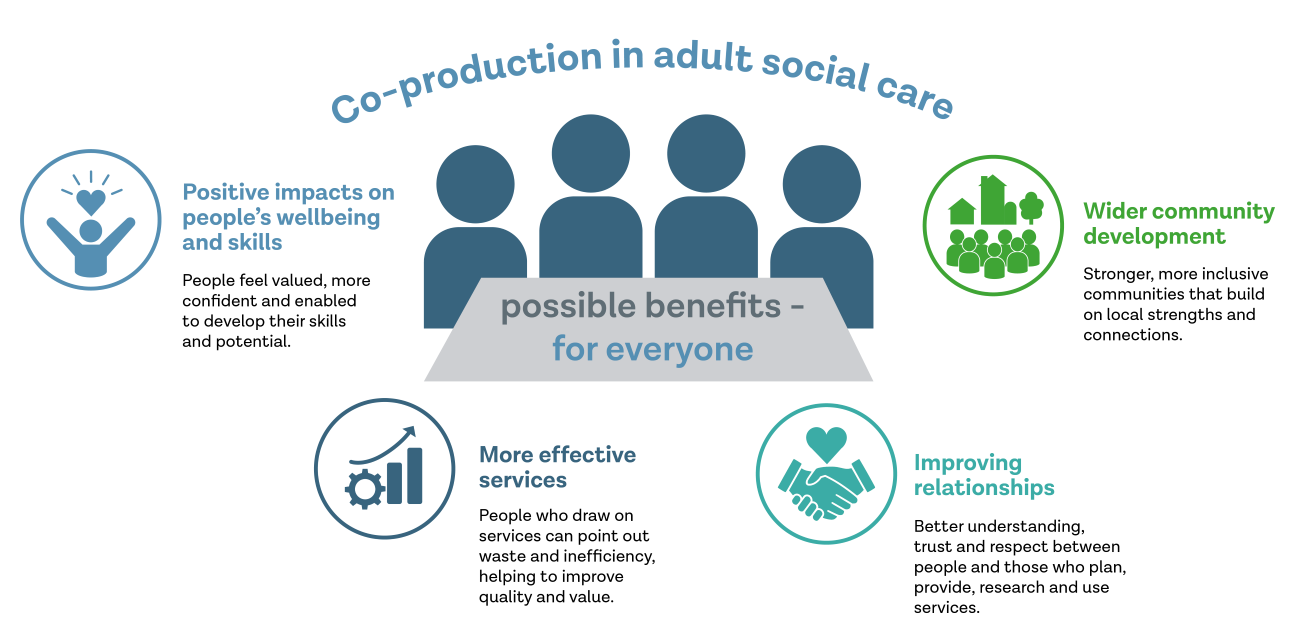
Co-production involves people coming together as equals to make decisions and create services that work for them. The new co-produced resource supports anyone interested in planning, running, or evaluating a project. It outlines the definitions, celebrates the approach, and explores how projects can aim for the highest levels of co-production.
Developed from work with adults, the core principles can be adapted to support practice with young people and more.
The resource is most effective when used to support reflection by all involved in a co-production project – including members of the public, practitioners, researchers, or managers.
The mark of co-production
The mark of co-production is a tool to help anyone interested in planning, running, or evaluating a co-production project.
View the resource
Why is co-production so important?
In the following video, Jenny Hurst reflects on why co-production is so important. The video is taken from the co-produced A Brighter Social Care Future: Evidence Review.
Co-producing the resource
The resource has been co-produced. The co-authors are Amanda Threlfall, Jenny Hurst and Jeanette Sutton. Amanda is a public contributor with a keen interest in co-production and promoting good practice within research.
Jenny is an Independent Living Co-ordinator at Action Disability Kensington and Chelsea, an organisation run by and for disabled people. Jeanette has experience of co-production through the development of the A Brighter Social Care Future: Evidence Review which was co-produced by over a dozen people with lived and living experience.
Claire Williams, Research and Development Officer at Research in Practice, supported the co-producers as they developed the workshops and wrote this practice tool.