
Young people aged 12-18 years old are the fastest growing age group to enter care in England. They are also at the greatest risk of experiencing poor mental health outcomes.
As services continue to face ongoing demand, there is a need for evidence-based, accessible ways to support young people’s wellbeing and sense of identity.
One approach widely used to address this need is life story work, which offers sense-making of experiences and aids building a coherent narrative of their life story. However, this practice is known for its high intensity work requiring a significant amount of input over many months and often a specialist to deliver.
The associated cost and difficulty of delivering this work can make it inaccessible to many young people who may benefit. And so, many young people may never have the opportunity to engage in this support.
Additionally, life story work tends to be delivered solely to younger looked-after children, and there is limited evidence and guidance available for its use with young people between the ages of 12 and 18.
The LIMITLESS II project at the University of East Anglia aims to understand if life story work could be delivered in a lower-intensity way to adolescents. This approach aims to harness everyday opportunities to help young people develop positive self-narratives and positive future expectations.
What is low-intensity life story work for adolescents?
For us, low-intensity life story work for adolescents involves the support of their caring adults to record and collect memories from their lives. These can then be used as conversational prompts to facilitate young people’s understanding of their life experiences and ability to reflect back on this time in the future. For example, ‘remember that time you spent all morning making a smoothie only to spill it on the dog? Well, here’s a photo of Fido covered in purple goop to jog your memory’.
Many caring adults will do this in varied ways for their young people, with limited guidance available to support them in doing so.
LIMITLESS II: The Spark trial
In collaboration with NEC Digital Studios, carers, social care professionals and care leavers from the Care Leavers National Movement, we have co-produced a low-intensity life story work resource called Spark. Spark is a physical resource that includes a series of activities and guidance for carers to use with young people in their care. It aims to equip carers with practical tools and activities that can be incorporated into everyday life whilst encouraging them to record those moments, otherwise known as ‘magic moments’.
We are currently working with foster and kinship carers who care for young people aged 12 to 18 years-old in England on a research trial of Spark. Led by Dr Simon P. Hammond, the trial aims to explore whether this co-designed resource can be successfully used in real-world care settings and whether it shows promise in supporting young people's mental health and wellbeing.
Participants will either be assigned to use the Spark resources or continue with usual practice. They will be asked to complete questionnaires at the beginning of participation, and at the one-month, three-month, and six-months marks.
Whilst we recognise that these kinds of interactions are already happening between carers and young people, we aim to make this practice more consistent and accessible by providing guidance on how to record those meaningful moments that happen in the everyday. For example, the chats you have in the car, making dinner or during the weekly food shop. These conversations can create opportunities for reflection and connection.
We look forward to sharing our findings, and the Spark resources, in the future.

Using adolescent-focused low-intensity life story work: Video learning resources
These short videos explore the use of a low-intensity approach to life story work to support positive self-narratives of young people in care and outline principles of impactful practice.

Creative life story work: The Blue Cabin approach
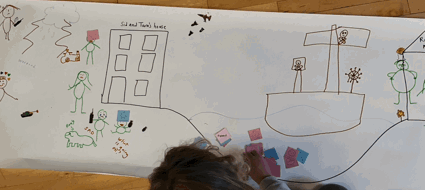
These video clips provide an overview of Blue Cabin's creative life story approach to working with children, young people and their carers. The approach is based on Rose’s model of 'Therapeutic Life Story Work' and provides space for children and young people to make sense of their lives.
Life Story Work: Practice Tool (2022)
This practice tool aims to build confidence in explaining difficult stories for care experienced children and young people.